
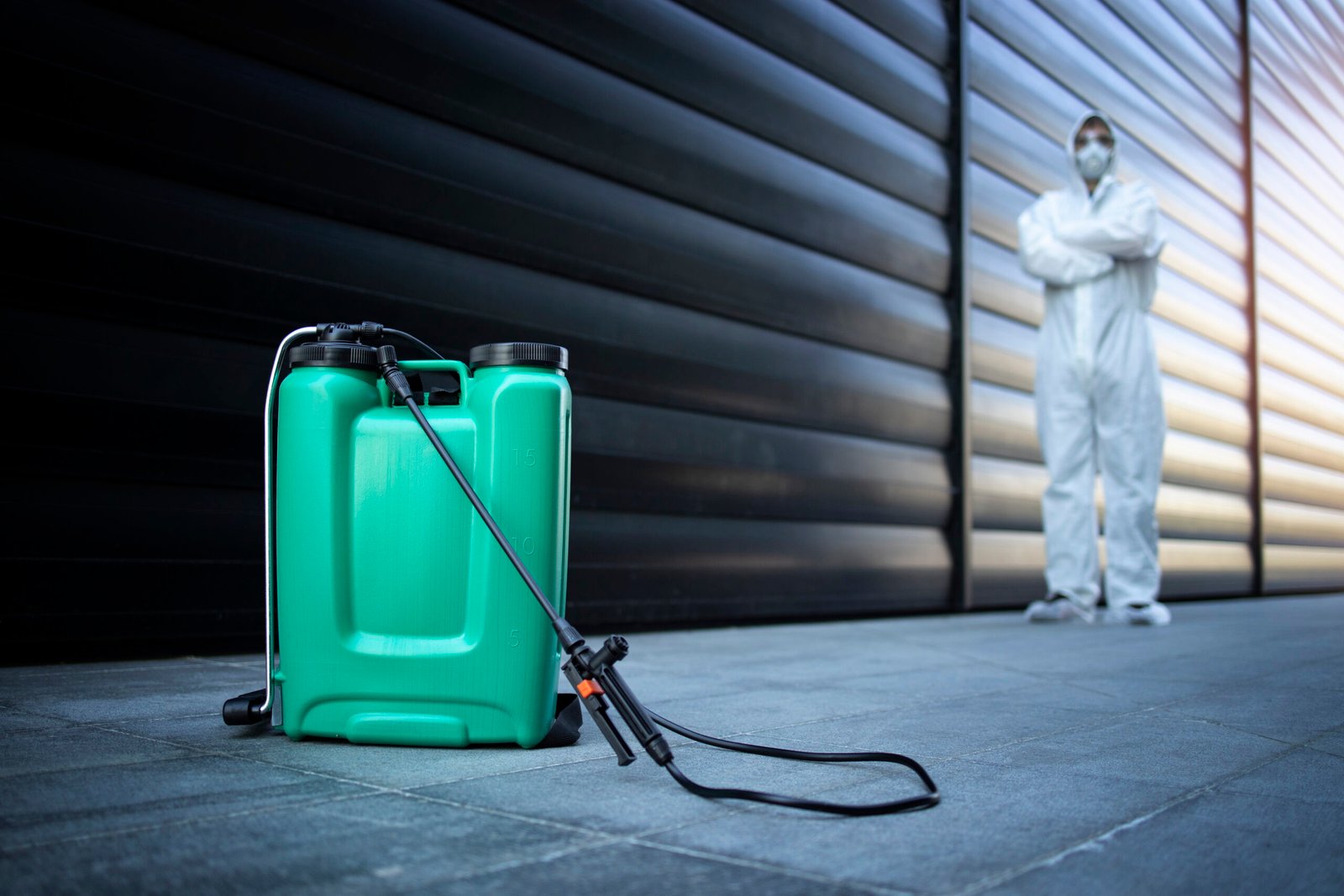
Industrial cleaning disinfectant kit
The disinfectant kit is an essential set to ensure complete and efficient sanitisation in industrial environments.
More than just a collection of products, the kit needs to be thought out strategically, considering the type of operation, the level of contamination, and the sanitary requirements of the sector.
A well-structured kit contributes directly to safety, productivity, and the quality of processes, making industrial cleaning more standardised and effective.
What is a disinfectant kit in industry
The industrial cleaning disinfectant kit is composed of chemicals, application equipment, and protection items that work together to eliminate visible dirt and invisible microorganisms.
Industrial sanitisation involves two fundamental stages: cleaning and disinfection, both of which must be carried out correctly to ensure effective results.
Furthermore, industrial cleaning is not limited to appearance. Its objective is to remove contaminants that can compromise equipment, products, and even the health of staff.
Main items that make up a disinfectant kit
An efficient disinfectant kit needs to bring together different types of products and materials. It is not just about a single disinfectant, but a complete set for all stages of sanitisation.
Essential chemicals
Chemicals are the core of the kit. Among the main ones are disinfectants, detergents, and degreasers, each with a specific function within the cleaning process.
Disinfectants are responsible for eliminating microorganisms, acting by destroying the cell wall or interfering with the metabolism of contaminating agents.
Detergents, on the other hand, help in the removal of organic dirt and residue, preparing the surface for disinfection. In heavier industrial environments, degreasers are fundamental for removing oils and grease.
Application equipment
Another indispensable component of the disinfectant kit is the materials used in the application of the products.
Microfibre cloths, mops, buckets, and squeegees are essential to correctly distribute products and ensure uniform coverage.
These materials are part of the professional cleaning structure and help to make the process more efficient and standardised, besides making it easier to reach different surfaces and areas.
Personal protective equipment
Safety is also part of the kit. The use of Personal Protective Equipment (PPE), such as gloves, masks, and safety glasses, is indispensable when handling chemicals.
These items protect employees and ensure that the process is carried out safely, especially in industrial environments where products may be more concentrated.
How to assemble an efficient disinfectant kit
Assembling a disinfectant kit is not just about gathering random products. It is necessary to consider factors such as the type of industry, the frequency of cleaning, and the level of sanitary risk.
Environmental assessment
Each industrial environment has specific needs. Food production areas, for example, require more rigorous sanitary control than administrative areas. Therefore, the kit must be adapted to the reality of each sector.
Standardisation of processes
A well-assembled kit helps to standardise cleaning, avoiding failures and ensuring that all stages are completed correctly. This also facilitates staff training and reduces operational errors.
Stock control
Maintaining efficient control of the items in the disinfectant kit is essential to avoid shortages or excess.
A well-structured list of materials allows for organised purchasing and ensures that all products are available when needed.
products are available when needed.
How to correctly use the disinfectant kit
Having a complete disinfectant kit does not guarantee good results if it is not used correctly. The sanitisation process must follow a logical sequence to be effective.
Cleaning before disinfection
Before applying the disinfectant, it is necessary to remove all visible dirt. Organic residues can prevent the product’s action, reducing its effectiveness. The ideal process involves washing, rinsing, and only then disinfecting.
Correct application of the disinfectant
The disinfectant must be applied according to the manufacturer’s guidelines, respecting dilution and contact time. This care ensures that microorganisms are eliminated efficiently.
Proper use of materials
The equipment in the kit must be used correctly, avoiding cross-contamination. Cloths and mops, for example, should be separated by area or type of use.
Benefits of a well-structured disinfectant kit
A well-planned disinfectant kit brings several benefits to the industry. It improves cleaning efficiency, reduces contamination risks, and contributes to the preservation of equipment.
Furthermore, the standardisation provided by the kit facilitates audits and ensures compliance with health and safety regulations.
Another important point is the optimisation of time, as the team begins to work with more organisation and clarity in the processes.
The disinfectant kit is a strategic tool within industrial cleaning. More than gathering products, it organises processes, increases efficiency, and ensures safety in all stages of sanitisation.
By assembling a complete kit, adapted to the company’s needs and used correctly, it is possible to achieve a high standard of cleanliness, reduce risks, and improve the quality of operations.
The combination of suitable products, correct equipment, and best practices is what transforms industrial cleaning into a truly effective process.