
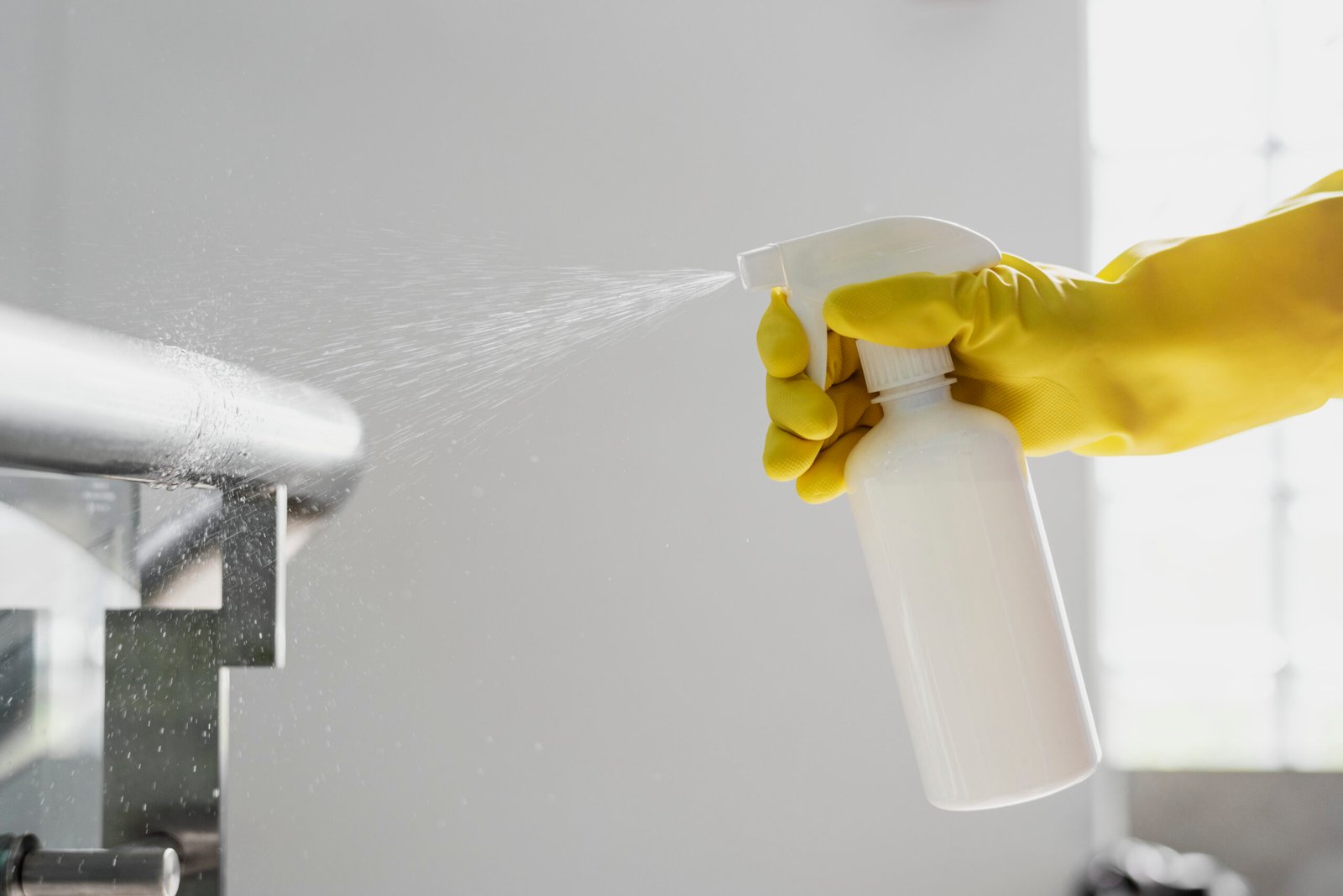
Tips for using industrial cleaning disinfectant
The correct use of industrial cleaning disinfectant is fundamental to ensure safe, sanitised environments that meet the standards required by regulatory bodies.
In industrial environments, cleaning goes beyond appearance: it is directly linked to the quality of processes, the safety of staff, and the integrity of products.
Therefore, understanding how to correctly apply industrial cleaning disinfectant is essential to achieving truly effective results.
The importance of industrial cleaning disinfectant
The primary function of industrial cleaning disinfectant is to eliminate invisible microorganisms, such as bacteria, fungi, and viruses, which can compromise production processes.
Unlike standard cleaning, which removes visible dirt, disinfection works at a deeper level, reducing the risk of contamination.
In sectors such as food, pharmaceuticals, and cosmetics, the proper use of industrial cleaning disinfectant is indispensable to avoid sanitary failures and ensure the final quality of the product.
Furthermore, well-disinfected environments contribute to the safety of employees and help maintain the company’s reputation.
How to choose the ideal industrial cleaning disinfectant
The choice of industrial cleaning disinfectant must take into account the type of surface, the level of contamination, and the environment where it will be applied.
Not all products are suitable for every situation, and incorrect use can compromise both effectiveness and safety.
Quaternary ammonium-based products, for example, are widely used as they are less aggressive and efficient against various microorganisms.
On the other hand, sodium hypochlorite is usually recommended for areas that require more intensive disinfection.
The important thing is to always use an industrial cleaning disinfectant that has the proper registration and is recommended for the company’s specific type of operation.
Correct steps for applying disinfectant
To ensure the efficiency of the industrial cleaning disinfectant, it is necessary to follow a structured process.
Directly applying the product to dirty surfaces is a common mistake that significantly reduces its effectiveness.
Cleaning before disinfection
The first step is to remove all visible dirt. Residues such as grease, dust, and particles prevent the disinfectant from coming into direct contact with microorganisms. Therefore, prior cleaning with a suitable detergent is indispensable.
Proper product dilution
Every industrial cleaning disinfectant has a specific dilution recommendation.
Using the product more concentrated than indicated does not mean greater effectiveness, just as over-diluting it can reduce its action power. Following the manufacturer’s guidelines is essential to ensure the expected result.
Contact time
After application, the product needs to remain on the surface for a set period to work correctly.
This period varies according to the type of disinfectant but is a critical factor. Removing the product before the required time compromises the entire disinfection.
Ideal frequency for using industrial cleaning disinfectant
The frequency of using industrial cleaning disinfectant depends directly on the type of environment and the activity performed.
In high-intensity production areas or those with a high risk of contamination, disinfection must be more frequent and rigorous.
In administrative environments, use can be more spaced out, but it is still necessary.
Ideally, each company should have a well-defined schedule, based on technical standards and risk analysis, ensuring that the industrial cleaning disinfectant is applied at the right time and with the appropriate regularity.
Important precautions during use
When using industrial cleaning disinfectant, some precautions are indispensable to ensure safety and efficiency.
The use of personal protective equipment (PPE) is highly recommended, especially with more concentrated products, to avoid direct skin contact or inhalation of vapours.
Another important point is correct storage. The disinfectant must be kept in an appropriate location, protected from excessive heat and properly labelled.
Additionally, it is essential that the cleaning team is trained to use the industrial cleaning disinfectant correctly, avoiding errors that could compromise the process.
Common mistakes when using disinfectant
Even with good products, some mistakes are still frequent when using industrial cleaning disinfectant.
One of the most common is ignoring the pre-cleaning stage, which prevents the product’s full action.
Another recurring problem is not respecting the recommended dilution, which can both reduce effectiveness and cause waste.
It is also common to remove the product before the necessary contact time or to use the same disinfectant for different surfaces without assessing its compatibility. These mistakes compromise results and can lead to rework.
Benefits of correctly using industrial cleaning disinfectant
When used correctly, industrial cleaning disinfectant brings clear benefits to the operation.
The reduction of microorganisms directly contributes to process safety and the final quality of products.
Furthermore, well-disinfected environments increase the durability of equipment and improve working conditions.
Another important point is compliance with health and safety regulations, which is essential to avoid penalties and ensure the continuity of activities.
The efficient use of industrial cleaning disinfectant depends on knowledge, planning, and correct execution.
It is not enough just to apply the product: it is necessary to understand its function, respect its guidelines, and integrate it into a complete sanitisation process.
Companies that adopt best practices in the use of industrial cleaning disinfectant manage to maintain safer, more productive environments aligned with market demands, transforming cleaning into a strategic advantage.